Funding Nature Networks (Summary)
Covering Framework Delivery Principles:
- Data, mapping, & monitoring
- Finance & resourcing
- Governance & decision making
- Knowledge & skills
- Monitoring, Evaluation & Reporting
- Participation, engagement, & communication
- Policy & Mainstreaming
- Project Development
- Project Implementation
- Spatial Mapping
Funding Nature Networks
In Scotland, Nature Networks can be funded through a blend of public funding and land-use support, developer contributions, and private/nature-finance mechanisms. There is currently no single Nature Networks fund.
The most appropriate funding mechanism will depend upon factors such as stage of progress (e.g. mapping, project delivery), land ownership and location. Listing projects on the Nature Finance Exchange is one way to connect businesses and funders with nature projects.
Work is underway to ensure Nature Networks are considered in possible future funding streams, for example future agri-environment schemes, updated Forestry Grant Scheme, points under the Scottish Biodiversity Metric (which will include Positive Effects for Biodiversity) etc.
Public grant funding available for Nature Network delivery
Nature Restoration Fund (NRF)
Designed to support habitat creation/restoration and biodiversity recovery.
Good fit for:
- Habitat creation, restoration and enhancement
- INNS control
- corridor, stepping-stone, and site-improvement works
- project development work where a fund round allows it
- local authority / partnership delivery projects
- rural and urban projects
- local-regional scale
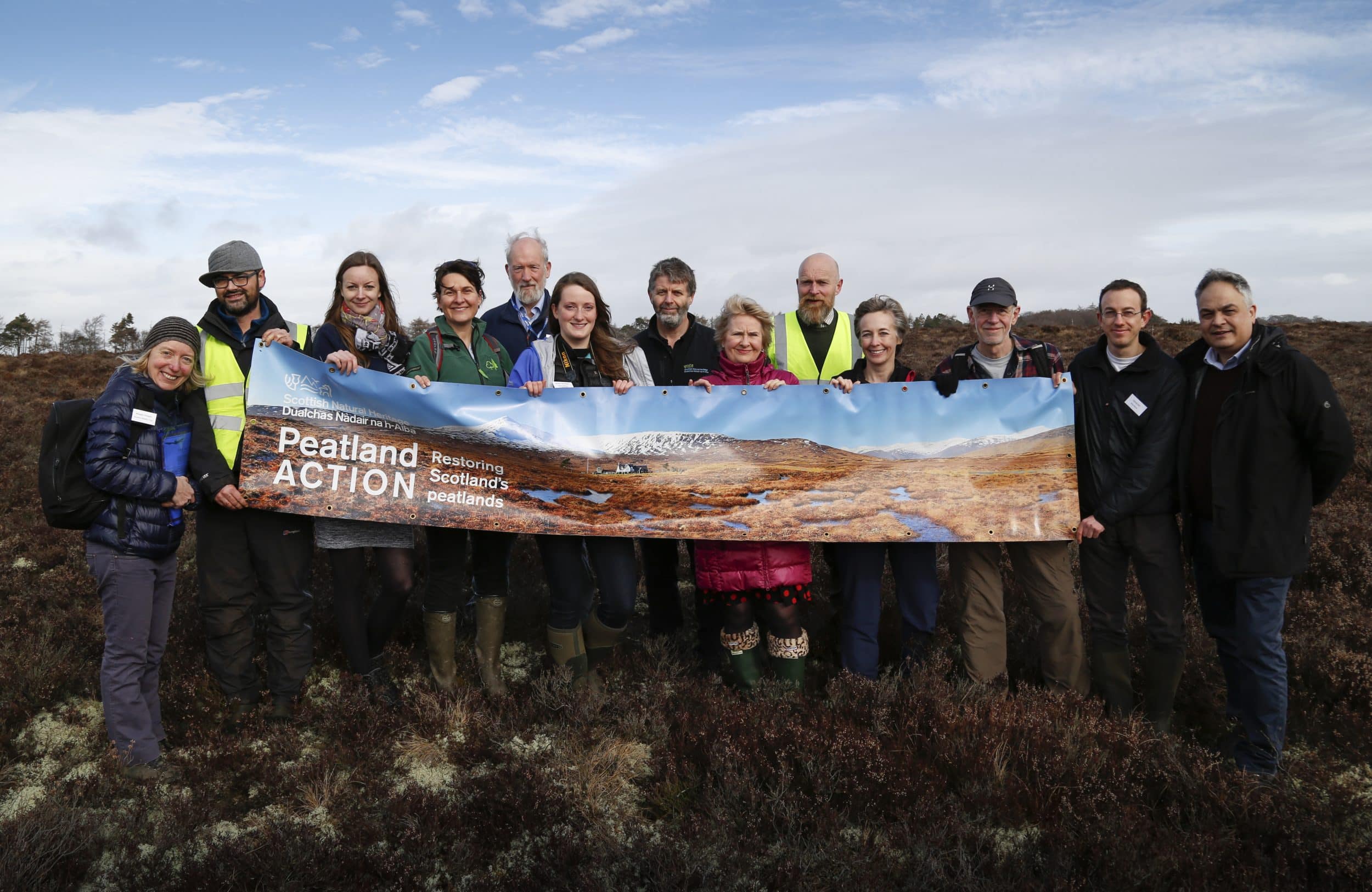
Peatland ACTION
The national programme for restoring damaged peatlands in Scotland, funding on-the-ground restoration and supporting enabling work such as feasibility studies, surveys, design, project management and practical works. Useful for capital works and getting peatland components of a network “investment ready.”
Good fit for:
- peatland restoration within a wider Nature Network
- feasibility/surveys/design for peatland interventions
- capital restoration works on degraded peatland
Agri-environment and land management support
Nature Networks will cross farmed landscapes, and connectivity often depends on actions such as riparian buffers, species-rich grassland, hedgerows, wetland creation, field-margin management, and low-intensity habitat management on agricultural land.
Good fit for:
- connectivity across farmed land
- habitat management by land managers
- smaller but cumulative “stitching together” actions between core sites
Forestry and woodland grants
Funding for Nature Network interventions such as Woodland creation, native woodland expansion, riparian woodland, and habitat linkages between existing woods. Nature finance guidance for Scotland also points to woodland carbon-related routes alongside grant support.
Good fit for:
- woodland creation/expansion as habitat links
- native woodland restoration
- shelterbelts, riparian woodland, and strategic planting that improves connectivity
National Lottery Heritage Fund and similar project grants
The National Lottery Heritage Fund can support projects that aim to improve habitat, conserve species, and help people connect to nature. These funds can be especially useful where a Nature Network has a strong community, heritage, engagement, interpretation, access, or capacity-building dimension.
Good fit for:
- community-led or place-based Nature Network projects
- engagement, volunteering, access, interpretation, learning
- partnership development and local capacity
Private finance / natural capital finance options
Peatland Code
The Peatland Code can attract private finance via the voluntary carbon market. Landowners restoring eligible degraded peatland can generate carbon units that may be sold to fund restoration and long-term management. Peatland ACTION and the Peatland Code can be used alongside one another.
Best fit for:
- larger peatland projects
- projects with measurable carbon benefits
- longer-term blended finance, not just grant support
Woodland Carbon Code
A route to private investment for woodland creation/restoration. For Nature Networks, this is most relevant where woodland expansion is a major component of connectivity and the project can credibly generate verified carbon units.
Good fit for:
- large woodland creation / restoration projects
- projects that can support verified carbon claims and long-term monitoring
- blended models combining grant plus carbon finance
Nature investment / blended finance vehicles
Scotland is developing responsible private investment and market-based mechanisms for nature restoration.
Facility for Investment Ready Nature in Scotland (FIRNS)
Created to help projects become investment-ready, and the wider policy direction is toward blended models that combine public money with private investment.
What this can look like in practice
- grant-funded project development + private capital for delivery/maintenance
- stacking income streams (e.g. biodiversity, carbon, water quality, flood mitigation, access/public benefit where possible)
- special-purpose vehicles or landscape partnerships aggregating multiple land parcels/projects
Good fit for:
- large, landscape-scale Nature Networks
- multi-landowner programmes
- projects with a revenue story or measurable ecosystem-service outcomes
Developer contributions and planning-led funding
Identifying opportunities as part of a Nature Network can help target finance from developments into important biodiversity-connectivity areas under National Planning Framework 4 (NPF4) Policy 3. Where local authorities have mapped and prioritised their Nature Network, there is a clearer basis for seeking or steering biodiversity-related contributions from development into the right places.
This is potentially one of the most practical funding routes for local authorities, because it links Nature Networks to:
- planning obligations / negotiated developer contributions
- biodiversity enhancement linked to planning decisions
- green-blue infrastructure delivered through development frameworks and masterplans
Good fit for:
- urban/peri-urban Nature Networks
- green/blue infrastructure corridors
- habitat creation linked to growth areas or regeneration
Philanthropic, charitable and partnership funding
For some projects—especially community, urban, or species/habitat-specific ones—Nature Network delivery can be assembled from a patchwork of:
- charitable trusts / foundations
- heritage and community funds
- corporate philanthropy / CSR
- contributions from NGOs, estates, utilities, and anchor institutions
Good fit for:
- project development phases
- gap-filling around public grants
- local partnership-led schemes with strong public engagement value
- Connecting businesses and funders with nature projects to unlock Scotland's natural wealth.
Help us build a useful toolbox
Share your feedback on existing guidance and resources, as well as links to others you think would be useful. We’d also love to hear about any great Nature Network projects that we should showcase.
.