Garscadden Local Nature Reserves – The Conservation Volunteers
Contact: [email protected]
Covering Framework Delivery Principles:
- Data, mapping, & monitoring
- Finance & resourcing
- Governance & decision making
- Knowledge & skills
- Monitoring, Evaluation & Reporting
- Participation, engagement, & communication
- Policy & Mainstreaming
- Project Development
- Project Implementation
- Spatial Mapping
Project summary
The Garscadden Local Nature Reserves (Garscadden Wood, Garscadden Burn, and Cleddans Burn) form a strategically important cluster of urban greenspaces within Drumchapel, Glasgow. Each site supports distinct but complementary habitats, including ancient broadleaved woodland, riparian corridors, heathland, and species-rich meadows.
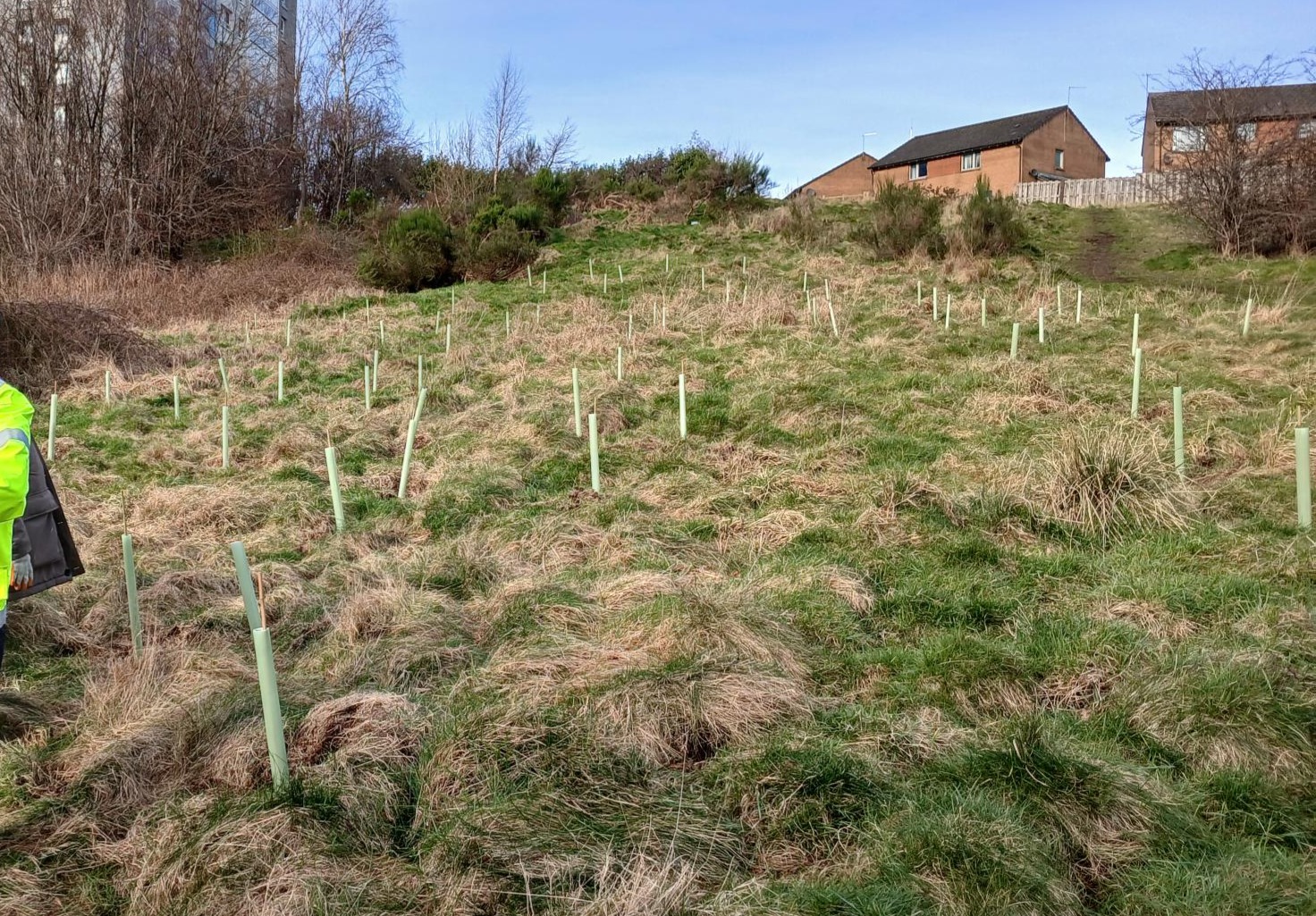
The project has focused on improving habitat condition, enhancing biodiversity, and strengthening ecological and community connectivity across the three reserves. Through invasive non-native species control, hydrological restoration, habitat enhancement, and access improvements, the reserves are evolving from isolated sites into components of an emerging urban Nature Network.
A longer-term vision seeks to connect Drumchapel’s LNRs via the proposed Drumchapel Way, creating a continuous green corridor for both wildlife movement and active travel. In parallel, strategic opportunities are being explored to strengthen cross-boundary Nature Network links toward West Dunbartonshire, building on historic connectivity proposals identified by the Clyde Valley Green Network.
Core Information
Delivery Partners: The Conservation Volunteers (TCV), Enable Glasgow, Forestry and Land Scotland (historic lease management), Glasgow City Region Green Network, Glasgow City Council (GCC), West Dunbartonshire Council (strategic connectivity context)
Time scale/span: Initial Local Nature Reserve (LNR) designation (Garscadden Wood) in 2006, followed by phased habitat management, access improvements, and invasive species control delivered over multiple years. Historic woodland management was undertaken through a 10-year lease with Forestry and Land Scotland, after which responsibility reverted to Glasgow City Council. Connectivity planning and partnership discussions with regional stakeholders are ongoing.
Funding sources: Works have been delivered through a combination of Glasgow City Council investment and NatureScot / Scottish Government funding. We have primarily focused on practical habitat management and access improvements, representing relatively low-cost, high-impact interventions leveraging volunteer capacity and partnership working.
Gallery
How was the project delivered in line with the Nature Network Framework principles?
Delivery has been grounded in Nature Network principles, particularly the emphasis on creating better, bigger, and more joined habitats within a constrained urban landscape. In particular, community participation and engagement formed a central pillar of delivery, working with volunteers and community groups to develop knowledge and skills, and share best practice. Volunteers from TCV and Enable Glasgow contributed to practical conservation, habitat management, and ecological surveying. Citizen science activities, including bird and invertebrate surveys, strengthened ecological monitoring while building local awareness and stewardship.
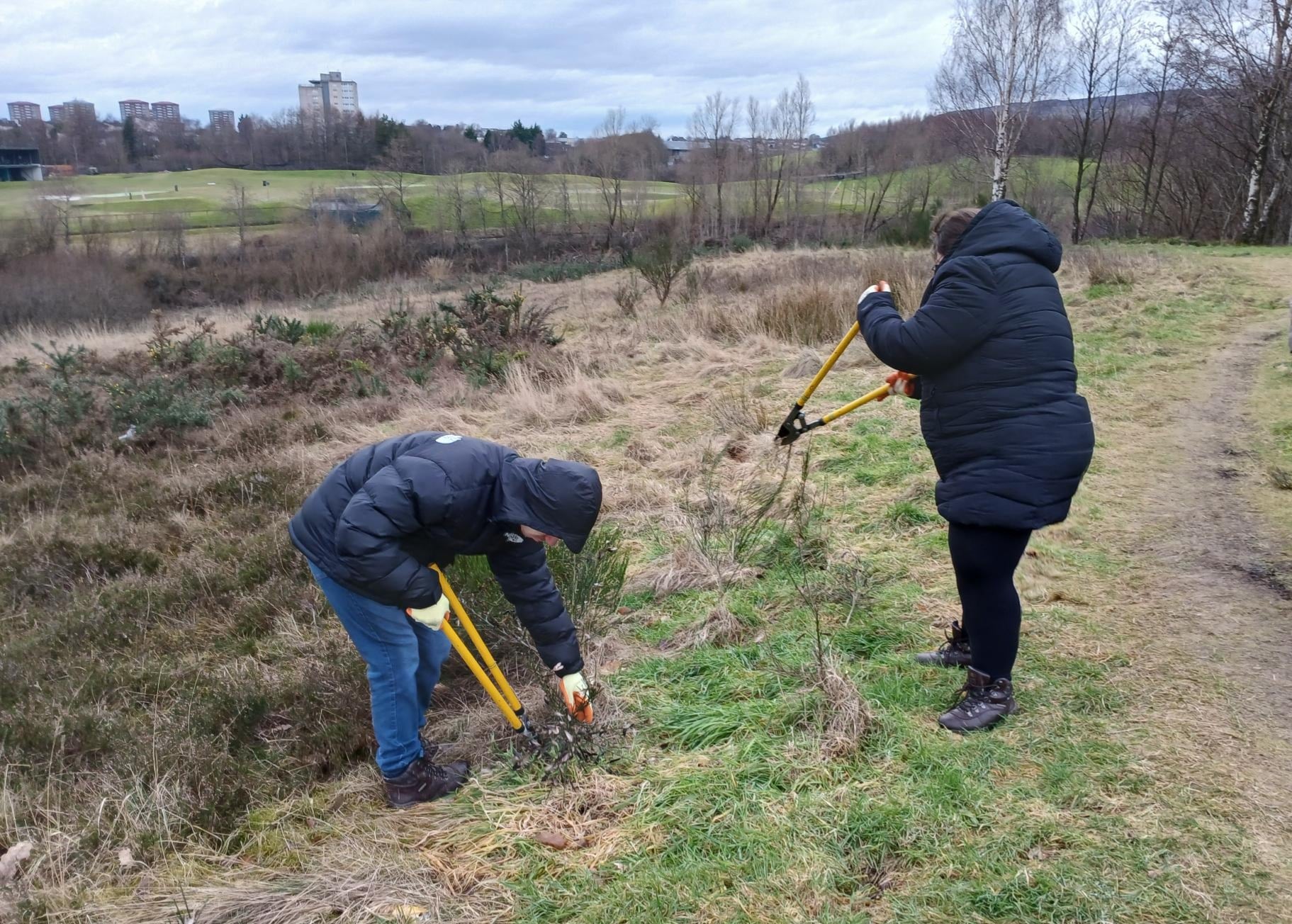
Habitat condition was prioritised through the systematic removal of invasive non-native species such as Himalayan balsam, Spiraea, Rhododendron, and Snowberry. These species posed a significant risk to native vegetation structure, riparian function, and sensitive meadow habitats. Their removal restored ecological integrity, increased habitat permeability, and protected notable features including orchid populations and ancient woodland flora.
Hydrological function was improved at Garscadden Wood through the clearance of drainage channels and swales. This work restored more natural water movement, reducing waterlogging and improving both vegetation health and path durability. Woodland thinning, dead hedge construction, and log pile creation enhanced structural diversity, generating microhabitats for invertebrates, birds, and small mammals.
Across Garscadden Burn and Cleddans Burn, meadow and heathland management involved scrub clearance, removal of encroaching aspen, and rotational scything. Cuttings were raked and removed to prevent nutrient enrichment, supporting species-rich grassland and maintaining habitats for Greater Spotted Orchids. These interventions reinforced habitat heterogeneity, a key factor in resilient Nature Networks.
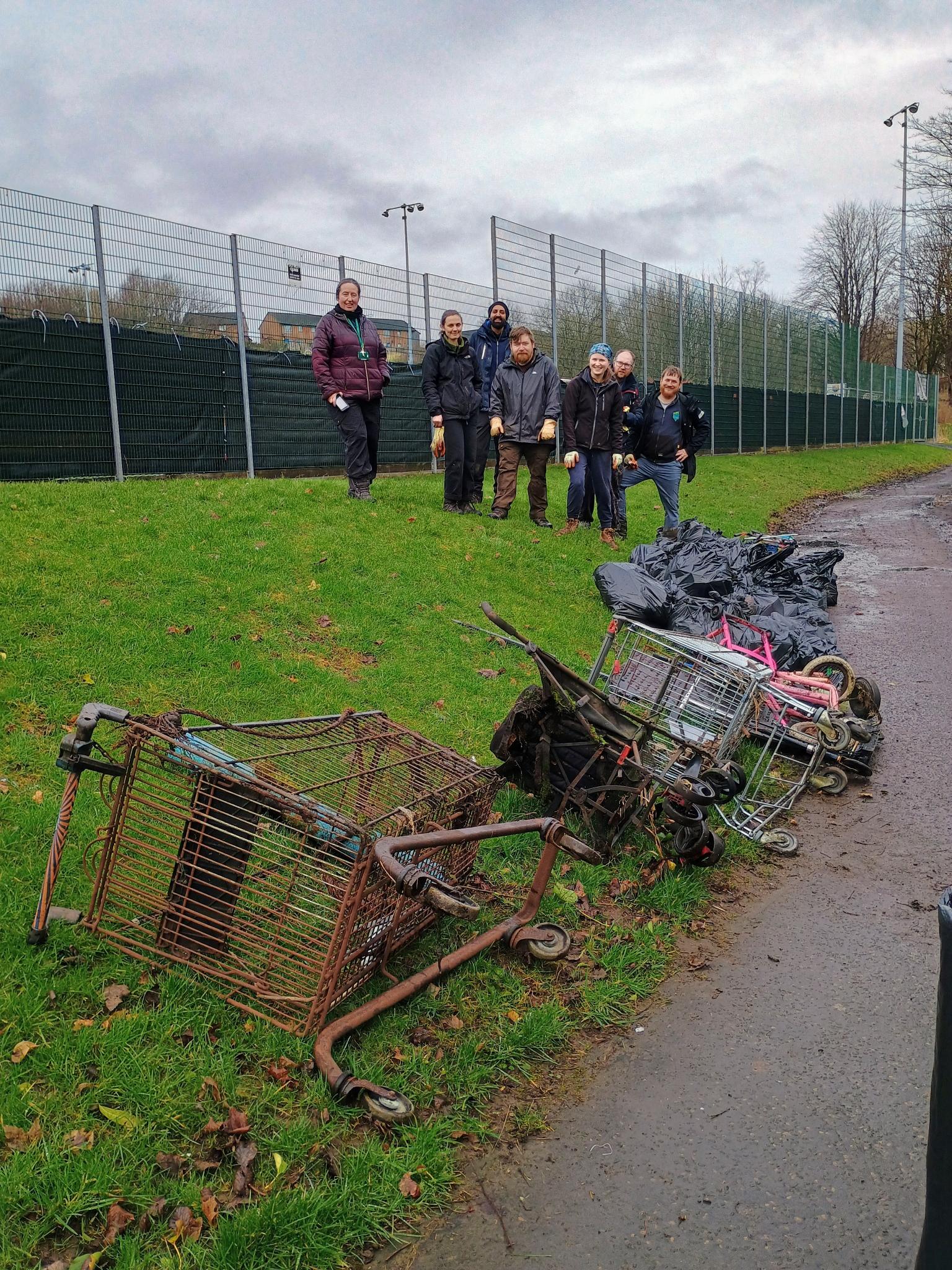
Access improvements were delivered alongside ecological works. Vegetation clearance, path widening, and sightline enhancements improved safety and usability, encouraging more frequent use of the reserves. Litter removal — including extraction of waste from burn corridors — improved habitat quality and visitor experience.
Connectivity thinking has guided both site-level interventions and future planning. Many improved paths already contribute to the developing Drumchapel Way, while the planned designation of an additional LNR east of Kinfauns Drive will further strengthen east–west linkage within the network. Strategic discussions with Clyde Valley Green Network and West Dunbartonshire partners aim to re-evaluate historic corridor proposals in light of landscape change and development pressures.
Improvements made
The project has delivered measurable improvements to habitat condition, biodiversity support, and functional connectivity. Native vegetation recovery following invasive species removal has strengthened woodland edges, riparian corridors, heathland, and meadow habitats. Structural enhancements such as dead hedges and log piles have increased habitat complexity and ecological niches.
Sensitive species and habitats have benefited directly, including ancient oak woodland communities, pollinators, and orchid populations. Improvements to hydrology have enhanced ecosystem function while reducing path degradation.
Equally significant have been the social benefits. Safer and more accessible paths have improved opportunities for recreation, active travel, and regular engagement with nature. Volunteer involvement has created local ownership, strengthened community wellbeing, and built long-term management resilience. We are now working as part of a Drumchapel way steering group facilitated by Ramblers Scotland to improve biodiversity and access along the route.
Strategically, the project contributes to the development of a coherent urban Nature Network, aligning local greenspace management with regional connectivity ambitions and Scotland’s wider biodiversity objectives.
Challenges/barriers overcome and how
The project has operated within a landscape shaped by historic drainage modifications, fragmented habitats, and ongoing land-use pressures. Invasive non-native species required sustained and repeated intervention, particularly where regrowth occurred. This was addressed through revisiting previously treated areas and integrating long-term control into volunteer programmes.
Habitat fragmentation and development pressures have complicated delivery of historic Nature Network proposals, particularly regarding cross-boundary links to West Dunbartonshire. In response, partners are adopting an adaptive approach, reassessing corridor alignments and engaging multiple landowners to identify realistic opportunities for connectivity enhancement.
Help us build a useful toolbox
Share your feedback on existing guidance and resources, as well as links to others you think would be useful. We’d also love to hear about any great Nature Network projects that we should showcase.
.